Showing posts with label review. Show all posts

Sunday, 5 February 2017

My Thoughts on Doctor Strange


Doctor Strange was just released in Japan, three months after its US release. However it’s the first Marvel film of the last couple of years that I haven’t rushed to the cinema to watch. In fact, I didn’t necessarily want to see it in the first place because of my lack of interest in the character. 

Until now Marvel had avoided the concept of magic in its cinematic universe. Scarlet Witch’s lack of “chaos magic” being a clear example. Instead Doctor Strange immediately showcases the unique approach to sorcery and wizardry during the opening scenes as The Ancient One battles Kaecilius and his forces. Put simply, the film looks and sounds fantastic. Strange’s introduction into the astral plane and dimensional shifts is a dazzling acid trip of colours, shapes and animations. The dizzying New York fight sequence between Strange, Mordo and Kaecilius is almost too hectic. I actually found myself briefly looking away from the screen in order to refocus. It’s an impressive set of action sequences that contrasts well with the franchise’s typical use of explosions and fistfights. My only issue is that while the environments and the effects are spectacular, the character models dancing around these kaleidoscopic set-pieces aren’t as polished. 

Story-wise, for the Marvel Universe to include Doctor Strange it was definitely justified in creating an origin film for such a unique character. We see Strange’s progression and transformation from the arrogant neurosurgeon to “Master of the Mystic Arts”. In fact the film wastes little time in showing Strange’s growth as an individual. One minute he’s struggling to use his hands, the next he’s surpassing his mentors and teachers. The film also does a good job at hinting at the grander scale and scope of Strange’s world. A multitude of dimensions, time manipulation, and the global nature of the Sanctums create a character, property and the basis for a plethora of interesting opportunities and situations in the future. 

But for all the film tries to differentiate itself from it’s Marvel counterparts, it still follows the typical narrative progression of any traditional superhero film. And with that comes a lot of the same, reoccurring problems. The most disappointing being the villain. Marvel yet again squanders the opportunity to present a villain of note. Mads Mikkelsen is one of my favourite actors and very capable of playing captivating foes. The problem lies in creating a balance between developing the protagonist and the antagonist, which the very nature of an “origin story” restricts. The story’s focus is purely on Strange, and Mikkelsen’s motivations and character are thus largely relegated to exposition and incoherent babble. In fact by the end of the film, his character withers away in the background in order to introduce the real villain Dormammu, who is equally trivialised in the last 10 minutes. With a wealth of villains in it’s universe, its frustrating and worrying that Marvel can’t seem to forge a character with any lingering danger or presence. 

In regards to the titular character, Benedict Cumberbatch certainly looks the part and he can wave his arms in a convincing manner. At times while the script falters and so too does his accent, his charisma proves just enough to create an engaging character. But I’m still not convinced that he is an actor worthy of his popularity or high esteem.  Meanwhile, Tilda Swinton and Chiwetel Ejiofor are great in their supporting roles, but Rachel McAdams is left by the wayside to question her own function in the film.

For me, Dr Strange wasn’t the evolutionary step in the Marvel franchise many critics have deemed it to be. Don’t get me wrong, it’s an enjoyable film with fantastic visuals. But it lacks a certain narrative charm or individualism that feels necessary with the character and the property. If Strange is indeed part of the next Avengers instalment, then I’ll be interested to see how they frame him with the likes of Hawkeye and Captain America. With a character so omnipotent, it seems pretty laughable to have him levitating next to a purple-dressed archer.

Monday, 30 January 2017

My Thoughts on Batman Vs Superman: Dawn of Justice


The superhero genre continued its dominance of the box office in 2016. The year saw the likes of Captain America: Civil War, Deadpool and Doctor Strange. But there was one film that I was really looking forward to; Batman Vs Superman: Dawn of Justice. And while the film became the talking point for many cinema-goers and comic book fans, I don’t think it was for the reasons Warner Bros. Pictures and DC were hoping for. I personally wasn’t too thrilled that they had chosen to skip a sincerely needed sequel to Man of Steel in favour of making their own version of The Avengers. Yet while I understand and share the common complaints and criticisms that many had, I still found a significant amount of enjoyment from watching it. 

My early skepticism about the film’s narrative and the studio’s eagerness to please its audience came to fruition in a film with an unnecessarily contrived and cluttered plot. With the sole precursor to Snyder’s “DC Universe” being an origin story for Superman, the task of establishing an entire franchise in 151 minutes and with little setup was a disaster waiting to happen. I’d argue that a considerable amount of the narrative issues could have been alleviated by a Man of Steel 2. The iconic question “Does the world really need Superman?”, the notion of him being the last Kryptonian, the “complex” character and motivations of Lex Luthor, and the existence of other superheroes could have been addressed in a story told immediately after the destruction of Metropolis and General Zod’s death. This would have suitably set the framework for a future confrontation with Batman and the eventual formation of the Justice League.

I particularly hated Jesse Eisenberg’s turn as Lex Luthor which was a completely dreadful and unnecessary attempt to reinvent the quintessential villain. And it hurts even more knowing that he is now a permanent part of this franchise. Elsewhere, the previously strong approach to Louis Lane’s character in Man of Steel was squandered by her reduction to the damsel in distress role yet again. Put simply, Batman Vs Superman suffers from a monumentally shoddy approach to its writing.

So what did I actually like about the film? First, I love the look of the film. I’ve stated numerous times that while Zack Snyder’s filmography is a hodgepodge of quality, his understanding of the visual side of film is pretty good. From Superman standing in front the US Capitol building to Bruce Wayne’s apocalyptic nightmare, Batman Vs Superman feels and looks very much like the pages of a comic book. Meanwhile the titular fight, though brief and enhanced with digital effects, manages to capture the weight of these two titans being thrown around. It’s simply a joy to watch. 

Second, Ben Affleck as Bruce Wayne/ Batman was undoubtably the best part of the entire film. I can even excuse Synder’s vision of the capped crusader as a cold-blooded murderer, unlike many. This version of Bruce Wayne is weathered, spent and bleak, which is perfectly shown in his tense exchanges with Alfred. The entire warehouse scene in particular, vigorously displayed a new approach to the iconic character that was brutish and terrifying. I’m really looking forward to seeing more of Batfleck, especially with in the eventual standalone film. I also thought Gal Gadot’s Wonder Woman offered a pretty stellar performance in her limited screen time.

In the end, Warner Bros. Pictures’ haste to achieve the same dominance as Marvel backfired and the studio is reeling from it. I don’t think there’s a conspiracy against the studio or DC, but I feel that in the wake of Marvel’s success, comparisons are inevitably going to be drawn between the two. And on that basis, Warner and DC are going to struggle to compete. Wonder Woman is on the horizon and so too is the Justice League, and if those fail to turn heads, then I’m afraid that we'll likely see a revamping of the franchise yet again in the near future. 


Thursday, 26 January 2017

Favourites of 2016: Rogue One: A Star Wars Story


After re-watching Star Wars: The Force Awakens recently, I decided to go back and read my article  exclaiming it to be one of my favourite films of 2015. After reading it numerous times and disagreeing with around sixty percent of what I had written, I feel I was too hasty in giving such glowing praise to what was essentially a soft reboot with little originality. 2016 saw the release of the franchise’s first “stand alone” film, Rogue One. And as per usual, the hype and marketing was omnipresent. The trailers looked great, the cast was amazing and director Gareth Edwards was an interesting pick. However I was still sceptical about the Disney’s attempts to revisit old ground, especially with the direct connections to my beloved original trilogy. 

The story, which stems from a sentence in the opening crawl of A New Hope, isn’t one of complex narrative twists and turns: There’s a group of ragtag, good guys. Meanwhile the bad guys have made a destructive weapon that threatens the galaxy. So the good guys have to get the weapon’s secret plans. It’s a safe film that uses the chronological setting to tell an engaging story while introducing characters both old and new. The film fortunately refrains from leaving an abundance of open questions and chooses it’s lasting “franchise significance” in a sensible and intelligent manner. The film finishes, and so too does the tale being told. 

What particularly stands out are the visuals and cinematography. The costly CGI “resurrection” of Peter Cushing’s character Grand Moff Tarkin is astonishing and I personally felt that it was justified in the narrative. But I hope that this doesn’t become a future trend of the film industry. The concept of seeing lost stars such as Robin Williams and Alan Rickman in new projects isn’t one that feels humble or progressive. Elsewhere, one thing that really stuck me was the sense of scale. Gareth Edwards has been notable for his prowess at showcasing scope and perspective. His directorial debut Monsters and reboot of Godzilla managed to successfully convey the magnitude of the events depicted on screen. In Rogue One, the new variation of AT-AT Walkers, Imperial Star Destroyers and especially the Death Star are presented in a way that gives a visual resonance which matches their intimidating presence throughout the film. The Death Star isn’t simply a matte painting, but a looming and ever-present force of terror. From the guerrilla warfare on Jedha to the rebels storming the beaches of Scarif, its hard to deny that Rogue One feels forceful and visceral in its presentation, which is helped by some excellent sound design. 

While I wouldn’t join the masses and exclaim that its a “dark, violent and grim film”, I will emphasis it’s overly-serious approach. Though I quite enjoyed the change of tone, the lighthearted banter and the occasionally quips aren’t enough to give a sense of humanity to the story’s characters, which is a major problem with Rogue One. I’m in complete agreement with the many criticisms surrounding the lack of character development. I’ve mentioned countless times that building engaging and deep characters is an important part of any film, especially one reliant on their motivations to the narrative cause. In a film where the majority of the audience already knows the fate of most of these individuals, it didn’t really do much to encourage any lasting sympathy towards their predictable demise. 

In the end, Rogue One was thoroughly enjoyable. However I’d be lying if my delight didn’t stem from my nostalgia for the franchise, especially seeing the Death Star and Imperial Walkers from the original trilogy. But even with a straightforward story and merely serviceable characters, I think it was definitely one of the best cinema experiences of 2016. 


Wednesday, 6 January 2016

Favourites of 2015: Star Wars: The Force Awakens


Some of my earliest cinema-going memories are of the re-releases of The Empire Strikes Back and Return of the Jedi. Funnily enough I can’t actually remember seeing A New Hope until it’s VHS release. I collected the action figures, the posters, even the Darth Vader drink cups, which all still remain up in the storage attic. Lightsaber duels with my brother, and pretending my bicycle was an X-Wing, it’s fair to say that Star Wars was an important part of my childhood. But I also share the customary disappointment towards the prequel trilogy. As a result, the notion of another series of squandered potential in the hands of creator George Lucas was understandably disheartening. Yet the news of J. J. Abrams sitting in the director’s chair after the successful reboot of Star Trek put some of those fears to rest. 

The Force Awakens doesn’t stray too far from the tried and tested elements of its predecessors, yet manages to construct new foundations and offer enough intrigue to establish itself as the beginning of a new trilogy. Daisy Ridley and John Boyega’s entrance into the Star Wars Universe offers a new lease of life and perspective. A determined scavenger with a mysterious past, and a reformed Storm Trooper allows for a compelling set of characters with an engaging chemistry. Meanwhile Adam Driver’s menacing Kylo Ren, Domhnall Gleeson’s General Hux and Andy Serkis’ Supreme Leader Snoke leave a strong impression that gives glimpses into the true state of the “Dark Side”, even if it’s first oughting ends in a predictable loss. The return of the franchise’s classic characters; Han Solo, Leia Organa and Chewbacca carefully and respectfully pass the torch to the charismatic youth that hope to ascend to similar stature. 

Star Wars: The Force Awakens was a welcome and satisfying end to a rather disappointing year in cinema over here in Japan. From the iconic text crawl accompanied by John Williams’ score, to the sounds of Tie Fighter blaster cannons, J. J. Abrams has recreated some of the magic and spirit that has made the Star Wars Universe so endearing and iconic. And while questions still remain to be answered, I can’t argue that the film left me with a smile. 


Friday, 24 July 2015

Avengers: Age of Ultron Review


I collect the figures, read the comics and watch the films, but the “superhero” film genre is becoming increasingly saturated with the same thing over and over again. You just have to look at Marvel and DC’s release schedules for the next couple of years, and it’s clear that Hollywood and modern cinema in general, are being suffocated by these multi-million dollar franchises. After waiting an eternity for its release over here in Japan, Avengers: Age of Ultron was one of my most anticipated films of this year. Yet for all its bells and whistles, the film feels like a significant step back in Marvel’s recently stellar form. And it can all be simply attributed to one thing; crap writing. 

Tony Stark’s overzealous need to protect humanity from the unknown is rewarded with a sentient A.I. program named Ultron, who unfortunately plans to eradicate the human race. Tensions arise, the team’s chemistry is tested and destruction ensues as the Avengers come to the rescue..?. At the story’s heart, and even in the title, is the introduction of the villainous Ultron. Yet as a continuation of Marvel’s inability to create genuinely threatening antagonists, the physically imposing Ultron fails to really bring anything of stature or note. I can’t fault James Spader’s vocal performance, but this iconic character’s transformation to the screen is bitterly disappointing. The needless, smug remarks and Stark mannerisms belittle the initial menace and threat that’s effectively established with the character in the first act. It’s therefore frustrating that one of the quintessential figures of the Avengers lore is reduced to a tedious and vapid figure with an “evil plan” that’s ridiculous beyond belief. 

This labelled “Age” of Ultron similarly finds little justification through the course of the film. It’s ultimately a weekend of mild nuisance for the Avengers, where each member has minor obstacles they have to overcome as a team. The foundations are there for a film of impressive scale and dramatic weight, but it’s constricted by a lack of drive and ambition from the writing. These inconsistencies and problems ultimately infect the majority of the film. Natasha Romanoff and Bruce Banner’s forced romance falls flat on its face to an uncomfortable degree. Their relationship feels tacked on rather than of genuine affection, which in hindsight had seemingly appeared out of nowhere. It’s an amateurish technique of forcing emotional gravitas to the ensuing events and it shows. 

One issue that has been a constant problem with the Marvel films of late is the underlying desire to further develop its overall “Universe”. Age of Ultron spends a tiresome amount of screen time on setting up Captain America: Civil War, Thor: Ragnarok and Avengers: The Infinity Wars. Previously, hidden secrets, minor details and easter eggs offered fans glimpses and signs of the bigger composition of the Marvel totality. But with the vast nature and multiplicity of the franchise, it seems that casually inserting mini trailers/ teasers for upcoming films has become the norm. It’s genius marketing, but distracts from the film at hand. Yet even when the decision is made to include these elements, they’re either forgotten about or trivialised. Take Captain America: The Winter Soldier for example. The final moment of that film is the dismantling of S.H.I.E.L.D at the hands of Hydra. It’s a significant event that see’s Nick Fury disappear off the grid, S.H.I.E.L.D’s secrets being leaked to the public, and Captain America, Black Widow and Falcon going their separate ways. But in Age of Ultron a couple of lines of dialogue are deemed sufficient to resolve these major narrative ramifications. It’s an intriguing angle that could have been used to create uncertainty over the Avengers’ public perception, but alas it’s completely wasted. 

But for all my problems with Age of Ultron, it was still entertaining to watch. Even with the massive drawback of an unintelligent script and story, the entire cast do a relatively good job. The chemistry between the team members is on display, and it’s one that remains engaging and charming to witness. While Aaron Taylor Johnson and Elizabeth Olsen’s accents are as inconsistent as the screenplay, they manage to justify their recruitment into the Avengers. I actually really enjoyed Scarlet Witch’s mind games with the rest of the team. Exploring the inner psyches and torments of our heroes, added more weight to each decision and reaction. Heroes with fragility or past trauma are always a lot more interesting than the immortal beings they’re usually whittled down to. Meanwhile the action set pieces are handled well and certainly look the part. The film hits the action beats that a blockbuster should, and the spectacle is, for the most part, satisfying.

Avengers: Age of Ultron is an acceptable sequel, but loses the intellect, charm and cohesion that propelled the superhero team to popular stardom back in 2012. At the time, Avengers Assemble was a surprisingly enjoyable blockbuster that felt sincere and fitting to its origins and the source material. Meanwhile last year’s Captain America: The Winter Soldier brought a sophisticated and thematically, engrossing story of conspiracy and espionage that offered a different perspective to the franchise’s characters and the genre itself. Guardians of the Galaxy took many by surprise with it’s gung-ho attitude and strong sense of humour throughout. This ability to infuse a unique element or personality has become an important factor in defining these individual films. Age of Ultron is an “Avengers” film, and by that stipulation it should be one of grandeur and lasting consequence. Yet while the aesthetics and performances are handled well, the sub-par writing leaves a film of missed opportunities and squandered ambition.


6/10 

Tuesday, 5 May 2015

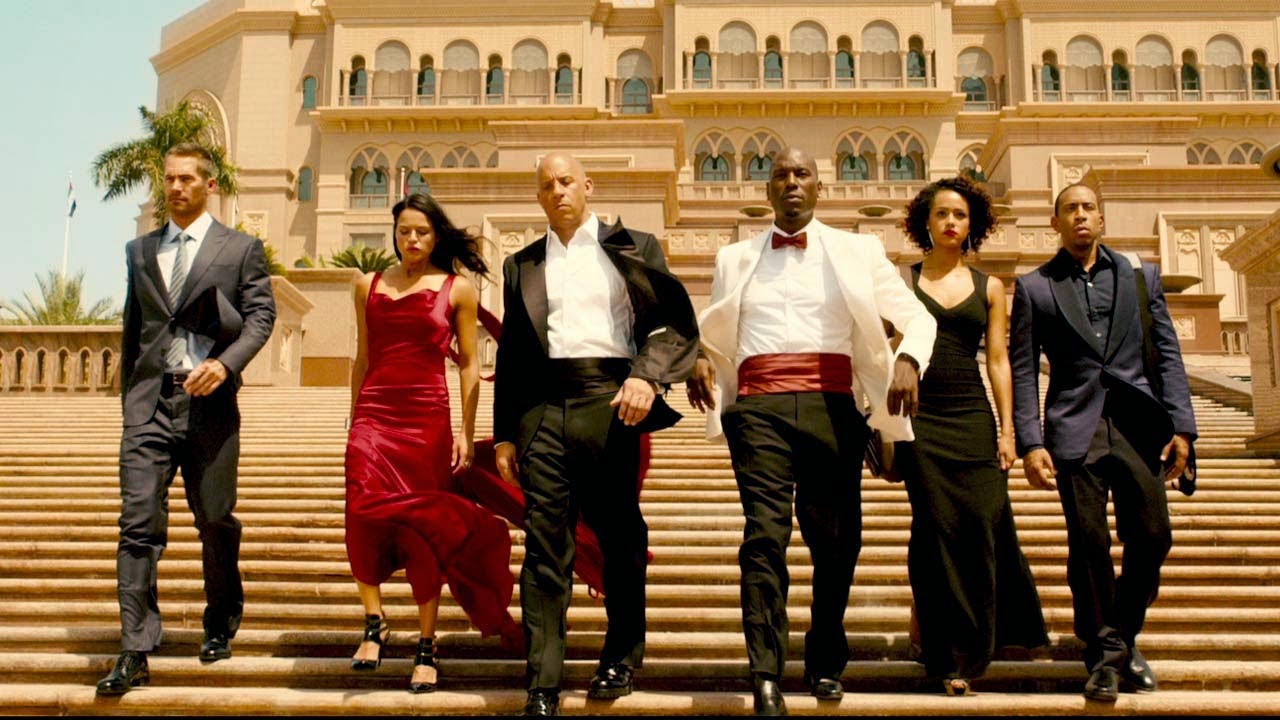
Furious 7 Review


I’ve had a strange “on and off” relationship with the Fast and Furious series ever since the first instalment graced our screens back in 2001. From there I’ve seen the ups and downs of the franchise and braved the whole boisterousness and audacity of it all. But it’s since Fast Five that I’ve come to appreciate them as the over-the-top “blockbuster” films they’ve truly become. Those looking for intellectually stimulating and thought provoking cinema aren’t necessarily going to find it here. Instead those voids are filled with further explosions, brawls and million dollar cars, all with the sole purpose of entertainment. And while my friends may question my sanity, I actually really enjoyed Furious 7

The film follows on from the Dominic Toretto and his crew’s apprehension of Owen Shaw during the events of Fast & Furious 6. They now find themselves being hunted down by his older brother Deckard Shaw played by a vengeful Jason Statham. At this point the series has become more about implausible stunts and audacious heists rather than the street racing and “detective work” it had originally encompassed. Here it’s no different. With a skeletal plot structure, director James Wan and writer Chris Morgan fill out the remaining runtime with impressive action set-pieces, new “important” characters, glamorous locations and Vin Diesel’s repetition of the word “family”. Even with a lack of narrative substance the story isn’t the mess many would predict. But if you were to employ any logical thinking behind it, then the entire thing would probably collapses on itself.

While the performances are hindered by the questionable script, there’s a deep chemistry between the actors that adds some much needed character and charm to the overall film. Vin Diesel and Paul Walker’s relationship has epitomised the franchise, and the friendship between them is great to watch as always. Michelle Rodriguez offers a surprisingly good performance. While her plot thread isn’t well handled, her character’s lingering fragility is conveyed in a somewhat touching manner. Dwayne Johnson doesn’t necessarily get the amount of screen time many would have hoped but manages to still leave an impression by his sheer physical presence and his vitality in the role. Meanwhile Kurt Russell looks like he hasn’t had this much fun in ages. 

The heavily spoken theme of “family” has been one that’s personified the series and while Vin Diesel spouts it at every opportunity, this underlying emotional crux feels strangely lacking from the film. Michelle Rodriguez’s amnesia surrounding her romance with Diesel’s character is calling for more dramatic weight than what’s actually prescribed. Additionally the crew’s losses of the previous films aren’t addressed to the magnitude that feels necessary and realistic. Yet with the timing of Paul Walker’s tragic death, Furious 7’s final goodbye to the Brian O’Conner character is one that’s poignant and appropriate. Simply put, the last 10 minutes are easily the most emotionally charged scenes of the entire franchise.

Furious 7 is oblivious to the concept of “restraint” and after 137 minutes of explosions, one-liners and travelling around the globe, I felt mentally drained. But while the story doesn’t make a whole lot of sense and it lacks the dramatic weight the narrative calls for, it’s still a highly entertaining film with a touch of self-awareness and charm that continues to rejuvenate the overall franchise. The final tribute to Paul Walker is a fitting one that respectfully showcases his legacy and spirit within the Fast and Furious series with forethought and sensitivity. Yet with a sequel in the works, I can’t help but feeling that it won’t be the same without his presence. 


7/10 

Sunday, 22 March 2015

Noteworthy Films of 2014: 22 Jump Street


I was really surprised at how good 21 Jump Street was back in 2012, but I wasn’t necessarily looking for a sequel. Inevitably with its success at the box office, the critical praise it garnered and Hollywood’s general lack of originality, we ended up with 22 Jump Street. And I’m glad that we actually did. Decent comedy sequels are a rarity amongst the lazy, schlock that gets served up on a regular basis.  And to be brutally honest, the comedy genre itself has become a haven for juvenile, indistinguishable crap that audiences unfortunately sink millions into. But every now and then a handful of films prove this generalisation wrong: Hot Fuzz, Pineapple Express, Neighbors and now 22 Jump Street. 

22 Jump Street doesn’t fall into the traps of comedy sequels; their incessant need to one-up themselves, or their inability to leave the comforts of the previous instalment. It’s clear from the off that the film doesn’t take itself too seriously. Breaking the forth wall indirectly, analysing it’s own flaws and the very notions of a remake and sequel, 22 Jump Street is smartly written and genuinely funny. From the assortment of weird and comical personalities, to drug induced high jinx, everything feels very familiar, which the film regularly points out, but simultaneously fresh. Action set-pieces manage to maintain the laughs through sheer silliness and hilarity. A car chase through the campus involving a motorised, over-sized football helmet is particularly memorable. 

While the writing is sharp and has the jokes, the performances really bring the best out of the script. The strong chemistry between Channing Tatum and Jonah Hill is the main reason why the two films have been so successful. Tatum in particular, continues his surprisingly good form as a comedic actor while simultaneously bringing the best out of Hill’s style of comedy. Their bickering and arguing never tires and their entire “bromance” relationship adds an underlying charm to the film.  The supporting cast also do a fantastic job with a constantly enraged Ice Cube and Jillian Bell’s blank expression and delivery offering some great moments. 

22 Jump Street is a highly entertaining sequel that managed to produce the funniest laughs of the year. Channing Tatum and Jonah Hill excel with the smart writing, and self-awareness of the overall film. While I have steadily lost interest in the genre, if we could see a comedy with a similar sentiment and mentality as this every year, then I’d be pretty happy. Just no more Melissa McCartney please.  

Tuesday, 3 March 2015

Noteworthy Films of 2014: The Raid 2


The Raid rejuvenated my love for martial arts films back in 2013, and I eagerly awaited it’s sequel. 
With a heftier story, an assortment of memorable characters and an overall larger scale, the film once again showcases the action set-pieces and visceral nature that we’ve come to expect and love from director Gareth Evans and his team. 

As a direct sequel I admire Evan’s attempts to add weight to the film’s plot. The first instalment’s bare-bones story merely provided light context for the hard-hitting action, but The Raid 2 attempts to adds narrative significance and consequence to the brawls and casualties with relative success. From the Indonesian gangster underworld to the Japanese Yakuza, betrayal, corruption and the overarching “undercover” thread, Evan’s has thrown everything into the sequel and the result is an engaging story running at a breakneck pace. 

Escaping the confines of the tower block, The Raid 2 explores everywhere from Jakarta’s prisons and back alleys to it’s nightclubs and restaurants. The stark contrast between the city’s differing lifestyles, while offers new environments for the brutal exchanges, gives a welcomed essence of life and variety to The Raid 2’s world. 

But it’s the martial arts that are once again the champion of the film. The unbelievable choreography and action scenes are in abundance, managing to surpass those of The Raid. From shootouts to car chases, everything feels grander and even more brutal than last time. Head’s are blown apart by shotguns, breaking bones is part of Rama’s daily routine and blood splatter plasters the deteriorating walls. Nothing is left to the imagination. Yet even with it’s overriding brutality and non-stop tempo, there are some very strong performances on offer. Iko Uwais’ Rama isn’t the stone-faced “superhero” that has plagued the action genre, but a conflicted individual who is fearful of the circumstances he finds himself force into. Meanwhile Arifin Putra also puts in a solid shift as the youthful and volatile antagonist. 

The film’s cinematography and editing perfectly capture the events and the film’s overall ferocity The multiplicity and methodology on and behind the camera is incredible to watch. From the intimacy of a car’s interior to the rugged expanse of a prison’s yard, each is filmed beautifully and meticulously.

The Raid 2 is an exhilarating assault to both the eyes and ears. Rarely pausing, Gareth Evan’s isn’t afraid to cram the 150 minute runtime with broken bones and blood soaked floors. Great performances and choreography, slick cinematography and editing, and an uncompromising and brutal demeanour make this one of the most enjoyable films of 2014. The unfortunate side effect of The Raid series now, is that watching western action films has becoming increasingly stale, slow and obsolete.

Sunday, 15 February 2015

The Long Awaited Update

Since moving to Japan my cinema-going days have been drastically cut to the point where I rarely have the opportunity to watch the latest releases. My love and passion for film still remains and I regularly keep up to date with regards to the news in the industry and upcoming features. But I’m afraid to say that my fortnightly cinema days are over. You may have also noticed that I have failed to write anything for the blog in nearly a year. As you can imagine, my new job and life in Japan have become the centre of my attention. It’s a shame because I love to write and talk about cinema. 

However, as a result of settling into my employment and my current situation, I have decided to return to the world of “blogging”, in a somewhat smaller sense. I will therefore be trying to update on a semi-regular basis with mini-reviews and mini-features. The first will be a series on “noteworthy” films of 2014 that I managed to watch. Obviously with the lack of access to the front-runners and nominees of Award Season, the list won’t be a comprehensive one but will cover some of the more major releases.

As an example of my recent decline in “cinema-visiting” form, here is a list of films that I desperately want to watch, but with Japanese releases and the extortionate price of media it’s proving to be rather difficult: 

Foxcatcher  
Birdman 
Whiplash 
Selma 
Ida 
Two Days, One Night
Inherent Vice
The Babadook 
A Most Violent Year 
Locke
Boyhood 
Snowpiercer 


Hopefully I’ll be able to catch them in the near future, but for the time I’ll have to suffice with what is readily available and obviously what I've already seen.

Best regards, 


Jack Singleton 

Tuesday, 22 October 2013

RespawningCouch Podcast: Audio Review: Captain Phillips


This week, I review Paul Greengrass' latest film Captain Phillips. Does he successfully manage to translate the extraordinary and intense events of the hijacking of the Maersk Alabama in 2009 onto screen?

Tuesday, 22 May 2012

The Raid Review

The Raid
Every now and then a film gets released that blurs the boundaries between simply enjoying it and evaluating it. Do you rate it solely on your enjoyment? Or do you analyse each structural element and come to a rational judgement? Welsh director Gareth Evans’ Indonesian “block-buster” The Raid happens to be that film. Simply put, The Raid is a turbo-charged, violent and magnificent piece of action cinema, that while light on narrative and character development, brings a well needed revamp to the stodgy grounds the genre has found itself on.
The story is simple. Set in an apartment complex in the slums of Jakarta, a SWAT team have been set the task to infiltrate the “safe house” where drug dealers, gangsters and murderers reside. Their objective is to arrest Tama (Ray Sahetapy), the most notorious of the bunch. But little do they know, it’s a trap! Narratively speaking,The Raid is barebones. Evans clearly hasn’t invested a considerable amount of time in the construction of a complex plot with rich characters and ground-breaking Indonesian dialogue. To be brutally honest, apart from the revelations during the course of its runtime, the film’s premise is pretty much summed up in the ‘Mission Briefing’ scene, or even in the title. Meanwhile the minor semblances of character development are conveyed in 2 minute introductions that loosely define each personality. For example, our hero Rama (Iko Uwais) gets a “suit up” montage and kisses his pregnant wife goodbye in the opening sequence. Similarly shallow, the villain Tama’s entrance is through his brutal execution of 4 men, which sets the tone for the entire film. Undeniably there’s not a lot of substance, and what is there is rather cliché. But that’s not the film’s paramount concern.
The Raid is first and foremost an action film, and this is where it undoubtably excels. Evans showcases some of the most impressive fight choreography of the last decade, in which every sequence attempts to surpass the previous one. The Indonesian martial arts of Pencak Silat is a breathtaking and brutal blend of bone-fracturing hits and sheer vigour, that constantly highlight the inadequacies of its mere mortal audience. Coupled with shootouts and some of cinema’s most intense knife-fights, The Raid is savage in its approach to astonish and entertain.
Alongside the stunt-team, a lot of credit has to go to cinematographer Matt Flannery and Evans himself in the general direction and editing of the film. While the “shaky-cam” approach unfortunately weaves its way into a few of the brawls, a range of camera angles and techniques bring a dynamic nature and flow to each segment. Meanwhile slow motion is thankfully limited to one-off moments and therefore allows the film to remain at its constant breakneck pace. The visual and audio composition of The Raid isn’t as artistically compelling, but manages to convey the film’s gritty and aggressive personality. The blank sets and enclosed locations frame and focus the action perfectly, while providing a bleak and surprisingly intimidating atmosphere. The audio design is exceptionally punchy and fearsome in its endeavour to make every punch and stab feel vicious and forceful. Simultaneously, the film’s score by Mike Shinoda and Joe Trapanese successfully captures the fast-paced nature of the onscreen violence, though it’s nothing particularly special.
Overall The Raid is a visceral, ferocious and highly entertaining piece of action cinema. Gareth Evans has created a film with a brutal temperament and with the sole aim of blowing the audience’s minds! If The Raid is to be judged on story, characters, and script then it would fall dramatically short. But as an action film, then without a doubt this is one of the best of the last decade.

9/10 
(Originally written for Impact Magazine: 20/5/12)

Friday, 27 April 2012

RespawningCouch Audio Review: The Avengers (Spoiler Free)

Jack and Nick review one of the biggest releases of this year............By the way............It's pretty awesome!!!!!


Podcast Powered By Podbean

Follow us on Twitter: @RespawningCouch
Email us at: respawningcouch@gmail.com

Sunday, 15 January 2012

The Thing (2011) Review

The Thing 2011 
(Originally written for Impact Magazine: 5/12/11)
John Carpenter’s 1982 remake of the 1951 classic The Thing From Another World, is one of the best adaptations and remakes of all time. And it’s a personal favourite of mine. Originally based on John W. Campbell’s 1938 novella Who Goes There? the film followed an American Antarctic research team who struggle against an alien parasitical organism, that perfectly replicates lifeforms. With the modern trope of regurgitating sequels, reboots and remakes, it was inevitable that the ‘cult classic’ would fall victim to modern cinema’s latest phase. Unfortunately, Matthijs van Heijningen Jr’s version fails to distinguish itself  between being a genuine sci-fi horror film, a prequel or simply trying to recreate Carpenter’s cinematic opus.
The prequel follows the events that transpired in the Norwegian research facility, which was briefly explored in Carpenter’s film. Set in 1982, palaeontologist Kate Lloyd (Mary Elizabeth Winstead) is recruited by Dr. Sander Halvorson (Ulrich Thomsen) to join a team of Norwegian scientists in Antarctica. They have discovered an alien spacecraft and the frozen corpse of a creature that crashed there 100,000 years ago. After excavating the body, they soon realise that the life form isn’t here to make friends. It is hard to ignore the fact that Heijningen Jr’s The Thing has an uncanny resemblance, structurally and narratively, to Carpenter’s version. We’re introduced to the setting, the characters, the ‘Thing’ makes an appearance, hell breaks lose and people start getting killed off. His and screenwriter Eric Heisserer’s clear intensions were to create a ‘remake’ in a similar style to the ’82 version within the confinements of a ‘prequel’ story. However their unequivocal and flawed attempts to mimic the predecessor become the film’s major downfall.
Bogged down in trying to replicate the styling and visual demeanour of Carpenter’s work, it soon becomes apparent that the same care and attention weren’t devoted to the screenplay. An overzealous nature to show every death scene and the constant exhibition of the ‘thing’ itself, completely removes the psychological element that the ‘assimilating alien’ concept allows for. The sense of mystery and paranoia amongst these characters is never a continuous notion that descends into the ‘cabin fever’ madness that Carpenter perfected. Individual scenes attempt to recreate those memorable experiences, but don’t have the same visceral impact and substance to successfully accomplish the same significance. The film’s ‘horror’ element therefore and unsurprisingly boils down to jump scares and predictable revelations, culminating in a horrendous third act.
The lack of character development, in particular, is a major missed opportunity with The Thing.We’re introduced to lead characters far too quickly and never have sufficient time to build an attachment to them. Thus, their imminent deaths become far less shocking, which has become a frustrating failure of most modern horror films. While the acting isn’t memorable, its competent and believable. Mary Elizabeth Winstead does well with Heisserer’s lukewarm script, providing a realistic and understandable protagonist who avoids turning into a typical action-hero. Meanwhile, Joel Edgerton and Adewale Akinnuouye-Agbaje are unarguably rehashes of Kurt Russell’s and Keith David’s characters from Carpenter’s film and while pale in comparison, they offer humour and charm to the proceedings. The Norwegian cast members adds believability and realism to the narrative with Jørgen Langhelle character Lars, bringing much needed madness and intensity.
The cinematography and sound design are top notch. The extensive set design conveys the claustrophobic nature and drab interiors of the research base, while the long establishing shots emphasise the remote and hostile surroundings. Marco Beltrami’s soundtrack manages to capture the chilling tone of Ennio Morricone’s original score and the iconic synthesised repetition, whilst adding his own mixture of sharp and flowing notes. The gory depictions of the ‘thing’ sound fantastic, however the same can’t be said about the visuals. Heijningen Jr’s employment of CGI in order to realise the creature’s transformations and assimilations, while inventive, don’t have the same awe-inspiring impact as Rob Bottin’s effects in the ’82 version. Prosthetics and practical effects are used, but the constant CGI showcase of the creature quickly takes away any suspense and anticipation, and looks more ridiculous than genuinely terrifying.
As a sci-fi horror film, Matthijs van Heijningen Jr. efforts fail to scare and shock, nor does he bring anything original to the genre. While it’s an entertaining and competently acted romp, its predictable nature and failure to evolve from the basic genre elements, result in a shallow experience. But as a prequel to John Carpenter’s film, it tries too hard to follow in the footsteps of the 1982 version. Numerous references, the soundtrack, the narrative structure will undoubtably and momentarily satisfy fans. But plot-holes and a disregard for the principle concepts and themes of its predecessor create further criticism towards its purpose and existence. Go watch Carpenter’s version.

5/10

Here's my thoughts on John Carpenter's The Thing (1982) 

Monday, 21 February 2011

Personal Favourites: Oldboy

Oldboy
A personal favourite and one that serious film lovers should watch is Park Chan-wook’s ‘Oldboy’. The plot centres around the story of Oh Dae-Su, who has been locked up in a room for 15 years. His lack of knowledge about his captors or the motives behind his imprisonment so drives him into insanity, with TV being his ‘teacher, friend and lover’. After suddenly being let out, he begins his brutal search for his captor. Though the plot sounds like the generic ‘revenge’ story, it soon turns into a twisted, psychological, romantic thriller. Whilst is easy to get lost in the various plot twists that Chan-wook repeatedly ‘hammers’ into our brains, the end result is a climax that is truly sadistic, disturbing and shocking in nature. 
 This is certainly not a film to watch lazily, and is one that will require a second viewing. Nor is it a film for those with weak stomachs, with its use of violence, D.I.Y dentistry, suicide and a notorious ‘octopus scene’. Overall ‘Oldboy’ is a brilliantly acted, dark, violent and thrilling feat of cinema that challenges our concept of the traditional, Hollywood revenge story with nightmarish and horrifying consequences. 

Check out my other 'Personal Favourites' in the Features section.