Friday, 24 July 2015

Avengers: Age of Ultron Review


I collect the figures, read the comics and watch the films, but the “superhero” film genre is becoming increasingly saturated with the same thing over and over again. You just have to look at Marvel and DC’s release schedules for the next couple of years, and it’s clear that Hollywood and modern cinema in general, are being suffocated by these multi-million dollar franchises. After waiting an eternity for its release over here in Japan, Avengers: Age of Ultron was one of my most anticipated films of this year. Yet for all its bells and whistles, the film feels like a significant step back in Marvel’s recently stellar form. And it can all be simply attributed to one thing; crap writing. 

Tony Stark’s overzealous need to protect humanity from the unknown is rewarded with a sentient A.I. program named Ultron, who unfortunately plans to eradicate the human race. Tensions arise, the team’s chemistry is tested and destruction ensues as the Avengers come to the rescue..?. At the story’s heart, and even in the title, is the introduction of the villainous Ultron. Yet as a continuation of Marvel’s inability to create genuinely threatening antagonists, the physically imposing Ultron fails to really bring anything of stature or note. I can’t fault James Spader’s vocal performance, but this iconic character’s transformation to the screen is bitterly disappointing. The needless, smug remarks and Stark mannerisms belittle the initial menace and threat that’s effectively established with the character in the first act. It’s therefore frustrating that one of the quintessential figures of the Avengers lore is reduced to a tedious and vapid figure with an “evil plan” that’s ridiculous beyond belief. 

This labelled “Age” of Ultron similarly finds little justification through the course of the film. It’s ultimately a weekend of mild nuisance for the Avengers, where each member has minor obstacles they have to overcome as a team. The foundations are there for a film of impressive scale and dramatic weight, but it’s constricted by a lack of drive and ambition from the writing. These inconsistencies and problems ultimately infect the majority of the film. Natasha Romanoff and Bruce Banner’s forced romance falls flat on its face to an uncomfortable degree. Their relationship feels tacked on rather than of genuine affection, which in hindsight had seemingly appeared out of nowhere. It’s an amateurish technique of forcing emotional gravitas to the ensuing events and it shows. 

One issue that has been a constant problem with the Marvel films of late is the underlying desire to further develop its overall “Universe”. Age of Ultron spends a tiresome amount of screen time on setting up Captain America: Civil War, Thor: Ragnarok and Avengers: The Infinity Wars. Previously, hidden secrets, minor details and easter eggs offered fans glimpses and signs of the bigger composition of the Marvel totality. But with the vast nature and multiplicity of the franchise, it seems that casually inserting mini trailers/ teasers for upcoming films has become the norm. It’s genius marketing, but distracts from the film at hand. Yet even when the decision is made to include these elements, they’re either forgotten about or trivialised. Take Captain America: The Winter Soldier for example. The final moment of that film is the dismantling of S.H.I.E.L.D at the hands of Hydra. It’s a significant event that see’s Nick Fury disappear off the grid, S.H.I.E.L.D’s secrets being leaked to the public, and Captain America, Black Widow and Falcon going their separate ways. But in Age of Ultron a couple of lines of dialogue are deemed sufficient to resolve these major narrative ramifications. It’s an intriguing angle that could have been used to create uncertainty over the Avengers’ public perception, but alas it’s completely wasted. 

But for all my problems with Age of Ultron, it was still entertaining to watch. Even with the massive drawback of an unintelligent script and story, the entire cast do a relatively good job. The chemistry between the team members is on display, and it’s one that remains engaging and charming to witness. While Aaron Taylor Johnson and Elizabeth Olsen’s accents are as inconsistent as the screenplay, they manage to justify their recruitment into the Avengers. I actually really enjoyed Scarlet Witch’s mind games with the rest of the team. Exploring the inner psyches and torments of our heroes, added more weight to each decision and reaction. Heroes with fragility or past trauma are always a lot more interesting than the immortal beings they’re usually whittled down to. Meanwhile the action set pieces are handled well and certainly look the part. The film hits the action beats that a blockbuster should, and the spectacle is, for the most part, satisfying.

Avengers: Age of Ultron is an acceptable sequel, but loses the intellect, charm and cohesion that propelled the superhero team to popular stardom back in 2012. At the time, Avengers Assemble was a surprisingly enjoyable blockbuster that felt sincere and fitting to its origins and the source material. Meanwhile last year’s Captain America: The Winter Soldier brought a sophisticated and thematically, engrossing story of conspiracy and espionage that offered a different perspective to the franchise’s characters and the genre itself. Guardians of the Galaxy took many by surprise with it’s gung-ho attitude and strong sense of humour throughout. This ability to infuse a unique element or personality has become an important factor in defining these individual films. Age of Ultron is an “Avengers” film, and by that stipulation it should be one of grandeur and lasting consequence. Yet while the aesthetics and performances are handled well, the sub-par writing leaves a film of missed opportunities and squandered ambition.


6/10 

Sunday, 28 June 2015

Mad Max: Fury Road Review


I’ve always admired the Mad Max franchise’s depiction of a post-apocalyptic wasteland filled with ferocity, savagery and the roar of rusty engines. V8-powered, bolted together vehicles churning fire and oxidised steel on a horizon of hell is a welcome contrast to the grayscale and zombie-ridden surroundings the “post-apocalypse” genre has been saturated with. Yet as a story of “The Road Warrior’s” revenge, redemption and survival, the series hasn't had the same impact as its visuals and sound. George Miller’s recent career has been one filled with dancing penguins and little of anything resembling action cinema. Yet for a director who’s been 30 years absent from the franchise, Mad Max: Fury Road is arguably the best in the entire series. 

Essentially a two hour vehicular chase, Max is caught up in Imperator Furiosa’s break for freedom 
while being chased by Immortan Joe’s convoy of adrenaline-fuelled madness. The theme of survival is encapsulated in nearly every facet of the film’s world; the citizens of the Citadel are ruthlessly held under Joe’s clenched grip over the water supply. Joe himself needs to continue his line through his breeding girls. Furiosa’s attempt to escape the horrors of her current situation and Max’s sheer perseverance to endure. There’s little doubt that Fury Road focuses its attention on the action and visuals, which leads to the film suffering from a lack of depth towards the end. Yet for a script that’s light on substance, the likes of Charlize Theron and Tom Hardy offer a compelling team as the wreckage ensues. The brief moments of respite offer enough character to maintain their mysticism whilst giving them some semblance of humanity and empathy. Theron’s Furiosa takes centre stage in a commanding, yet fragile performance that steals the show from Max. Tom Hardy is suitable gruff and cynical under the unfortunate circumstances he finds himself in. There’s a flashy yet vain attempt to “re-address” his tragic backstory and psyche, but he shares the characteristics of a protagonist from the spaghetti western formula; weathered and mumbling. It’s entertaining, but a few more lines of dialogue wouldn’t have hurt him or the film. The supporting cast, especially Nicholas Hoult, does a similarly fine job.

While light on story and dialogue, the barebones nature offers a solid foundation for which the visuals and sound design flourish. The world of Mad Max is one of “fire and blood” and “madness” as our protagonist says in the opening monologue, and while the harshness and hostility of the environment and its inhabitants is clearly evident, the film is visually stylish and repeatedly stunning to watch. For an apocalyptic wasteland comprised of deserts and rocky outcrops, Miller injects a swell of colours and tones; yellows, oranges, and blues that add variation and vibrancy. The warped realities of society and humanity shown within the set and production design, help craft the treacherous surroundings and its characters. The symbolism of Valhalla, the War Boys’ chanting V8 in front of an podium of steering wheels, and the harvesting of “mother’s milk” add a twisted richness to film’s design. These small details further the construction and theorising of these personalities and locations which has been a staple of the franchise’s style. The careful use of CGI and Miller’s desire to champion practical effects really adds to the sheer savage and hard-hitting nature to the film. Vehicles twist and buckle under the weight of collisions and debris litters the pristine sand dunes. Everything has force and an incredible amount of speed. Meanwhile Junkie XL’s thunderous soundtrack of pounding drums, vigorous guitar strumming and sharp shifts in tone reinforce the crazed fury that’s being depicted on screen.

Mad Max: Fury Road is another fine example of action cinema that doesn’t require an over-zealous  and contrived screenplay to remain engrossing and thoroughly entertaining. A simple narrative, interesting characters, incredible production design and thrilling stunt choreography turn the two hour runtime into a beautiful and unhinged storm of destruction and lunacy. It’s lovely.

8/10

Monday, 18 May 2015

My Problem with Anime


As of now, I’ve lived in Japan as an English Teacher for a year and two months. My job involves educating the nation's youth on the “joys of learning English”. Whether they’re teaching me more about Japan and the Japanese language is a completely different matter. Yet it’s clearly evident that my preconceived knowledge and understanding of the country’s modern culture was and still is pretty terrible. 

I was exposed to the likes of Godzilla, Ultraman and Doraemon at a relatively young age, most of which remains relatively fresh in my memory. Heck, my first trip to Disneyland was actually in Tokyo, where I shook the hand of a Japanese Mickey Mouse whom I couldn’t understand a single word. Soon my primary/ elementary school days were awash with the likes of Pokemon, Gundam Wing and Dragonball Z which would abruptly end during my teens, I’m not entirely sure why but I seem to recall video games consuming most my free time. 

It’s only been over the last five years that I’ve built a steady awareness and subsequent interest in Japan’s animated medium, know as anime. Being introduced to Studio Ghibli offered an assessable gateway into the sights and sounds that were on show, and I’ve formed a strong relationship with Ghibli’s work as you may know. From there Akira, The Girl Who Leapt Through Time, Tokyo Godfathers and Azumanga Daioh have highlighted some of the best the genre has offered. Yet from an outsiders’ perspective, wadding through the tidal wave of new series each year and the extensive back catalogue is a monumental and impossible task. Even as someone who occasionally watches new anime, I feel completely out of my depth when someone starts discusses it. I seem to recall the last time being aggressively belittled after I stated that Attack on Titan was “an overrated pile of crap”, which it is. 

There’s an obvious breadth of creativity to the medium that as spawned a barrage of personalities, stories and fictional worlds that have been met with mixed success. Yet one thing’s for sure, there’s plenty of choice; high school dramas, alien invasions, psychological thrillers an straight-up pornography, there’s something for everyone. Yet for all its popularity and impact on Japanese culture and modern pop culture in general, my cynical sensibilities have grown over the pass two years. Don’t get me wrong, I enjoy anime, certain anime. But those few series represent a minuscule percentage of what's actually available. The incessant moaning from students and friends on my critical nature towards anime is one that has justified me writing this article. 

There are definitely plenty of problems with the medium but I’ll be highlighting the four major problems that have become prevalent from my “observations”;

-Accessibility

-The Actual Characters

-Originality and Fan-service

-Anime’s “dark and twisted side”


Tuesday, 5 May 2015

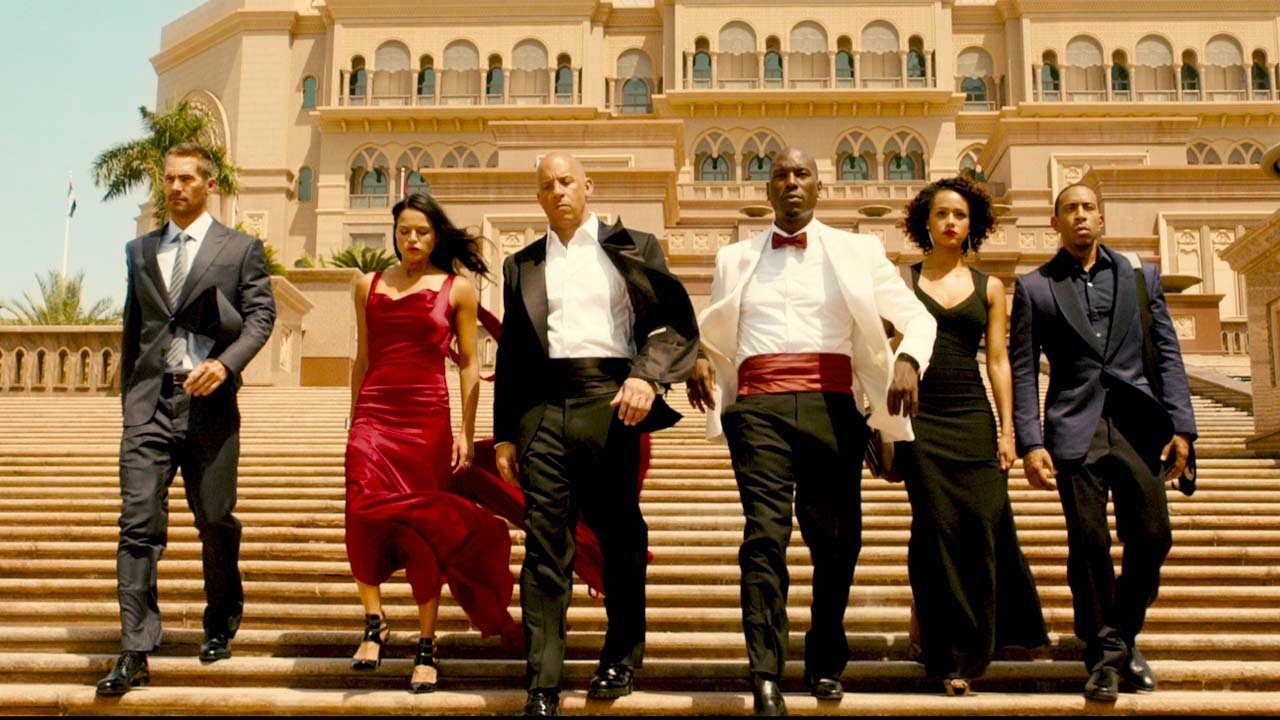
Furious 7 Review


I’ve had a strange “on and off” relationship with the Fast and Furious series ever since the first instalment graced our screens back in 2001. From there I’ve seen the ups and downs of the franchise and braved the whole boisterousness and audacity of it all. But it’s since Fast Five that I’ve come to appreciate them as the over-the-top “blockbuster” films they’ve truly become. Those looking for intellectually stimulating and thought provoking cinema aren’t necessarily going to find it here. Instead those voids are filled with further explosions, brawls and million dollar cars, all with the sole purpose of entertainment. And while my friends may question my sanity, I actually really enjoyed Furious 7. 

The film follows on from the Dominic Toretto and his crew’s apprehension of Owen Shaw during the events of Fast & Furious 6. They now find themselves being hunted down by his older brother Deckard Shaw played by a vengeful Jason Statham. At this point the series has become more about implausible stunts and audacious heists rather than the street racing and “detective work” it had originally encompassed. Here it’s no different. With a skeletal plot structure, director James Wan and writer Chris Morgan fill out the remaining runtime with impressive action set-pieces, new “important” characters, glamorous locations and Vin Diesel’s repetition of the word “family”. Even with a lack of narrative substance the story isn’t the mess many would predict. But if you were to employ any logical thinking behind it, then the entire thing would probably collapses on itself.

While the performances are hindered by the questionable script, there’s a deep chemistry between the actors that adds some much needed character and charm to the overall film. Vin Diesel and Paul Walker’s relationship has epitomised the franchise, and the friendship between them is great to watch as always. Michelle Rodriguez offers a surprisingly good performance. While her plot thread isn’t well handled, her character’s lingering fragility is conveyed in a somewhat touching manner. Dwayne Johnson doesn’t necessarily get the amount of screen time many would have hoped but manages to still leave an impression by his sheer physical presence and his vitality in the role. Meanwhile Kurt Russell looks like he hasn’t had this much fun in ages. 

The heavily spoken theme of “family” has been one that’s personified the series and while Vin Diesel spouts it at every opportunity, this underlying emotional crux feels strangely lacking from the film. Michelle Rodriguez’s amnesia surrounding her romance with Diesel’s character is calling for more dramatic weight than what’s actually prescribed. Additionally the crew’s losses of the previous films aren’t addressed to the magnitude that feels necessary and realistic. Yet with the timing of Paul Walker’s tragic death, Furious 7’s final goodbye to the Brian O’Conner character is one that’s poignant and appropriate. Simply put, the last 10 minutes are easily the most emotionally charged scenes of the entire franchise.

Furious 7 is oblivious to the concept of “restraint” and after 137 minutes of explosions, one-liners and travelling around the globe, I felt mentally drained. But while the story doesn’t make a whole lot of sense and it lacks the dramatic weight the narrative calls for, it’s still a highly entertaining film with a touch of self-awareness and charm that continues to rejuvenate the overall franchise. The final tribute to Paul Walker is a fitting one that respectfully showcases his legacy and spirit within the Fast and Furious series with forethought and sensitivity. Yet with a sequel in the works, I can’t help but feeling that it won’t be the same without his presence. 


7/10 

Sunday, 26 April 2015

Other Notable Films of 2014

As I previously stated; 2014 was a difficult year to watch the latest and "greatest" cinema releases. The following are a few others that I felt weren't necessarily my favourites of last year, but were notable in their own little ways:


Dawn of the Planet of the Apes: A surprisingly enjoyable sequel to the surprisingly enjoyable first film of this rebooted franchise. Great performances all round and a story that’s thankfully restrained in scale but retains an essence of grandeur. 


Guardians of the Galaxy: A slick and highly energetic first outing for this band of unusual and very likeable characters. Strong performances, great visuals, plenty of action and an underlying level of humour offers something fresh in this increasingly saturated and morbid genre. The villain’s a bit of a letdown though.

Interstellar: Christopher Nolan’s latest sci-fi epic was visually stunning and sounded amazing, Matthew McConaughey’s performance. But to be brutally honest was rather mediocre. It’s a notable addition to 2014 because of the spectacle.

Killers: Don’t be fooled into expecting balls-to-the-wall, martial arts action by the “producers of The Raid” marketing ploy. This is a slick thriller with a disturbing and uncompromising story of murder, torture and revenge. While it’s final act is too outlandish, this is an visceral and thoroughly engaging film.


The Lego Movie: While the insufferable theme song is still engraved in my brain, this was a captivating and very funny film about toy bricks. Let me reiterate; a captivating and very funny film about toy bricks. Fantastic animation, hilarious characters and a creative script provided laughs and endless smiles from my podgy face. 
  

Saturday, 11 April 2015

Noteworthy Films of 2014: Nightcrawler


Nightcrawler proved to be another film that highlighted how one magnificent performance can elevate a fairly standard story into something memorable and thrilling. While the narrative’s themes of the TV news industry and the questions of morality and ethics are interesting, they’re never explored past the confines of Jake Gyllenhaal’s character. But Gyllenhaal’s sleazy performance shines through the entire picture, becoming the film’s predominant strength. His overly confident and absolute willingness to do anything offers an interesting perspective to both the “cutthroat” nature of TV news and Los Angeles as a city. His gaunt face with slick back hair along with his uneasy, twitchy personality create an utterly detestable being whose sole intention is to gain recognition and wealth without any morale compass. Yet it’s his lack of morality and absence of restraint that makes Nightcrawler’s progressive nature engrossing. There’s an unpredictability to his actions that blurs our preconceptions of his character and the film as a whole.  

Riz Ahmed puts in a firm shift as Lou’s desperate sidekick, while Rene Russo is superb in a volatile performance as a news director with similarly no moral compass. Meanwhile, Robert Elswit’s cinematography is well-executed as always with some slick camerawork. Street lighting, the glow from neon signs and the flashing blues and reds of patrol cars give Los Angeles a seedy and squalid look that suits the overall tone of the film. The editing department also deserve praise for matching the film’s fluctuating pace and mood consistently. 

Nightcrawler is a strong directorial debut from Dan Gilroy, and showcases his ability to get the best out of his cast and crew. By itself, the film isn’t necessarily a culmination of tightly written and composed elements and I was slightly disappointed by its reserved attempts to explore its distinct premise. But some clever dialogue, skilled cinematography and Gyllenhaal’s striking performance propels this from the depths of mediocrity and into something genuinely engaging and noteworthy. 


Thursday, 26 March 2015

Quick Video Review: Under the Skin

I've done a podcast, so the natural progression would be video reviews. This is my first attempt at a short video review of Under The Skin (that I had previously written).